The Magazine of Personal Technology

Wednesday, 28 November 2007

Steinway & Sons Pianos and Audio System - Real or Recorded?

“The man that hath no music in himself, Nor is not moved with concord of sweet sounds, is fit for treasons, stratagems and spoils.” William Shakespeare. Moved was the operative word, and Steven Ambrose was seriously moved, at the launch of the new Johannesburg Showroom of Steinway and Sons Pianos, locally represented by Pianoforte. A mix of customers, Journalists and Interested parties gathered at the design Quarter for the opening of the new shop, and were well entertained by live piano music, and moving sounds from the Steinway Lyngdorf music system. Play on......


A Steinway & Sons piano is recognised universally as the world’s finest instrument. But for many years, South Africans wishing to audition a new Steinway had to travel abroad. That is, until recently, when Deon van Vuuren, a local Steinway owner, founded Pianoforte (Pty) Ltd and secured the sole rights to import the Steinway & Sons family of pianos. The imported range comprises Steinway, and the Steinway designed and engineered mid-level Boston and entry-level Essex uprights and grand pianos. Pianoforte offers prospective owners a choice of over 100 styles and finishes to select from.

“Steinway pianos are, and always will be, the finest piano the world has ever known,” explains van Vuuren. “Independent surveys show that Steinway pianos are used in 98 per cent of all concerts and recordings. Forbes magazine lists Steinway pianos in its top ten ‘great investments’. Steinway instruments have also been the preferred instrument of the world’s leading composers and pianists, as attested by the names appearing on the Steinway & Sons Artists Roster.”

What makes a Steinway & Sons piano so special?


The secret lies in Steinway & Sons’ uncompromising selection of materials, notably the timbers, production methods and principles of construction. Since 1853, Steinway & Sons has revolutionized piano making with its 115 patents which affect virtually every one of the 12,000 parts which go into each piano. There is the legendary Steinway action, for example, that is effortless, noiseless and instantly responsive. There is also the Steinway pin-block which is specially designed to keep the instrument in tune longer. Steinway also invented the Duplex Scale on the principle of enabling the freely oscillating parts of the string, directly in front and behind the segment of the string actually struck, to also resound. The outcome is a unique timbre, an exceptional dynamic range and fullness of overtones – one of the marvels forming the inimitable Steinway tone.
The basic principles of construction developed by Steinway are virtually unaltered and still apply to the modern manufacture of upright and grand pianos all over the world. However, greatly innovative, Steinway has always been a pioneer in exploring and establishing more efficient production methods and continues to register new patents. This is why one often hears “the best Steinway is a new Steinway” from performing concert pianists.


How is a Steinway & Sons piano constructed?


Each and every Steinway is both an original and a work of art. It takes, for example, a year to build a Steinway grand, and more than 80 per cent of the piano is still handcrafted. Every Steinway-designed piano has unique, proprietary “secrets” that make it far superior to competitors’ pianos.
Only materials and components offering optimal transmission and reproduction of sound are used; wood is processed under tension, and nothing but wooden connectors join the individual parts. In this way, sound can ripen and grow to the full. As a result, the Steinway and its unmistakable tonal characteristics retain unparalleled excellence for decades.


This is also of particular importance for South Africans: when the pianos are shipped abroad, they are able to adapt to different climates because the wooden connectors ensure that all the parts expand or contract at the same ratio, thereby never affecting the sound adversely. This is also the reason why a Steinway piano can retain its unmistakable tonal characteristics for decades.


Why does every Steinway sound unique?


No two Steinways are alike. The Voicer’s paramount task is to discover and create the tonal individuality of each instrument. The expansive, almost unlimited range of expression offered by a Steinway enhances the broad spectrum of musical composition. A Steinway not only so perfectly embodies the tonal ideals of classical music, but also those of jazz, rock, musicals and pop music.


STEINWAY & SONS AND PETER LYNGDORF LAUNCH THE WORLD’S FINEST FULLY-INTEGRATED DIGITAL SOUND SYSTEM IN SOUTH AFRICA


Steinway Lyngdorf has launched the Model D Music System, the world’s finest fully-integrated digital sound system, in South Africa. The system is a collaboration between Steinway & Sons, creators of the world’s finest pianos, and Peter Lyngdorf, Europe’s pre-eminent developer and manufacturer of high performance digital sound systems.

Announced in New York earlier in May 2007, the collaboration sets a new high for the audio industry through the introduction of a new, ultra-prestigious category for discerning consumers worldwide. The Model D Music System is developed primarily for the home as well as for prestigious commercial properties.

Created by a team of international designers, technicians and engineers led by Peter Lyngdorf, the Steinway & Sons Model D Music System has taken more than two years to develop and delivers an outstanding reproduction of music akin to a live symphony orchestra in concert.

Each Model D Music System includes twin speakers, which are painstakingly crafted through more than 170 hours of precision machining, and the entire system takes approximately seven weeks to assemble. The system has distinctive luxury design details, including the Steinway & Sons lacquering found on the world’s best pianos.

At the time of installation, a Steinway Lyngdorf service specialist will visit the user’s location to utilise the RoomPerfect™ technology and “voice” the Model D System. This is done by mapping the acoustics of the given environment using a microphone. After the measurements have been uploaded, the system calculates a room correction that is applied to ensure perfect tonal balance and acoustics in any part of the listening space.

The Model D Music System is the first of its kind to employ fully digital amplification with RoomPerfect™ adaptation technologies. As a completely integrated music system, all components were carefully selected and designed from the outset to complement each other perfectly.

The Model D Music System is available for demonstrations at Pianoforte’s new showroom in Sandton. The showroom is situated on the first floor of the Design Quarter in Fourways. The Steinway Lyngdorf Model D Music System costs approximately R1.2 million depending on ruling exchange rates.

Steven Ambrose

Monday, 15 October 2007

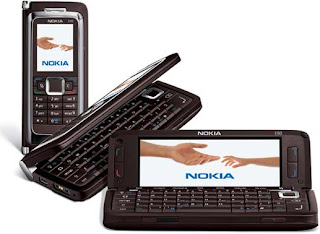
Nokia E 90 Communicator

Mobile Computer or Mobile phone? You decide.

The New Nokia E 90 Communicator has been recently released in South Africa. This phone has more memory, processing power, and features than the average laptop from a few years ago. Steven Ambrose lives with the E 90 and tries to decide what it really is, and what it means for all of us.

Nokia have been the number one mobile phone handset company for many years, and their phones have mostly been at the leading edge of cellular technology, so when Nokia released the new E range of mobiles, most companies in the mobile arena sat up and took notice. The E 90 is based on the Symbian 9.1 and 3rd edition S60 operating system. In simple terms this is a smart, very smart phone.

In order to explain what a smart phone is and does, I must digress just a little. The Symbian operating system has its roots many years ago as a PDA (Personal digital assistant, namely the Psion) operating system At the time this was a revolutionary device, that hoped to replace the diary as we knew it. The Psion was characterised by being extremely user friendly, and intuitive, and carved quite a niche for itself amongst the geek and business crowd. The latest iterations of the Symbian operating system, as used by Nokia and other phone manufactures, is light years ahead of that used in the original PDA’s. Nokia presents their phones as mobile computers and in all reality they are.

The Nokia E 90 has only one drawback, in my opinion, so we will get it out of the way before we really start. The E90 is big, very big, it won’t fit in a pocket, it is not for a handbag, and it cannot be ignored when on the desk. In short, if small and unobtrusive is your need, then this device is not for you.

That being said, the Nokia has everything else you can, and can’t imagine, in a mobile device. As specs mean very little in the real world, I am not going to enumerate the spec sheet in this review, you can find this info at http://www.nokia.co.za/.

The main feature of the phone, for me, is that when closed it is the quintessential Nokia. If you know and have used a recent and not so recent Nokia phone, then this phone is instantly easy to use and instantly recognisable. The phone has the following main features which I actually used, Wi-Fi, 3G HSDPA, Quad band, so it works in most of the world, a full web browser and a great e-mail client, 3.2 Mega Pixel camera, full QWERTY keyboard and not very useful GPS and mapping.

In order to help make clear what smart phones are and where they fit in I have included a small excerpt from a series of Insight articles authored by David Wood in 2005 for Symbian:-
“Smartphones in 2005 are roughly where the Internet was in 1995. In 1995, there were, worldwide, around 20-40 million users of the Internet. That's broadly the same number of users of smartphones there are in the world today. In 1995, people were debating the real value of Internet usage. Was it simply an indulgent plaything for highly technical users, or would it have lasting wider attraction? In 2005, there's a similar debate about smartphones. Will smartphones remain the preserve of a minority of users, or will they demonstrate mass-market appeal?

Personally, I have no doubt as to the answer. Smartphones are for all. Smartphones - the rapidly emerging new category of advanced computer-based programmable mobile phones - will appeal to all users of mobile phones worldwide. Smartphones are built from highly advanced technology, but they won't require a highly advanced understanding of technology in order to use them. You won't need to be a computer whiz kid or the neighbourhood geek to get real value from a smartphone. Nor will you need a huge income to afford one. Smartphones will help us all to keep in better touch with the friends and colleagues, and information and discussions, and buzz, that are important to us, and they are opening up new avenues for entertainment, education, and enterprise alike.

Smartphones increasingly use their computer-brains and network-connectivity to:
  • Excel at all sorts of communication - instant messaging, email, video conferencing, and more.
  • Help us to organise our to-do lists, ideas, calendars, contacts, expenses, and finances.
  • Boost our effectiveness in our business life - connecting us smoothly into corporate data systems.
  • Entertain us with huge libraries of first-rate music, mobile TV, social networking, and games.
  • Guide us around the real world, with maps and location-based services, so we never get lost again.
  • Subsume our keys, ID cards, tickets, and wallets - so we can leave these old-world items at home.
  • Connect us into online information banks covering every topic under the sun.

In short, smartphones are rapidly becoming our preferred mobile gateway into the ever growing, ever more important digital universe.”

I have lived with this phone for a few weeks and can only say that it impresses me more and more, unlike some other so called smart phones that land up irritating more and more.

The question I get asked by most people who see the phone, and that is all people, (as I said you can’t hide this phone), is the E 90 worth it? The simple answer is yes and maybe. It is not for all of us and its cost and functionality, and most of all form factor make it fairly specific in its utility.
In order to make sense of all this and remembering that Gadget is.... a gadget magazine, I put the Nokia E 90 through the Gadget 5 point test and here are the results.

Is it ready to use ?

Open the box, insert your SIM card, put in the battery, enter the PIN and off you go. I did not read the instructions, as Gadget Geeks are prone to do, yet found it simple to get up and running. The basic phone features are available on the front panel, and are exactly the same as most recent Nokia cell phones. Making and receiving calls, sending SMS’s and finding contacts are intuitive and easy to do. One other point, the E 90 switched on fast, unlike some Phones based on the rival Windows Mobile platform. The phone comes supplied with all the needed accessories such as good pair of headphones, stereo of course, travel charger and PC cable.

Is it easy to use ?

I have gone on at length that this is a mobile computer not a phone, yet the genius of this device is that before you begin to explore its computer persona, it is a Nokia mobile phone and behaves exactly as you would expect.

I am not going into this side of the phone as it has been explained and reviewed more times than I can Google, save to say Nokia have always been one of the leaders in mobile phone interfaces. Nokia phones are easy to use and very intuitive.

This brings us to the rest of the phone; flip it open for best effect and the outstanding widescreen display lights up. The keyboard can as well if you wish, which is a useful and thoughtful touch. A row of quick access buttons on top of the small, but easy to use keyboard, gives direct access to the main features of the phone.

This is however where the learning curve comes in, read the manual I implore. I did not and quickly became lost in the vast array of features and capabilities the E 90 has. Once you go through he basics it does become clear and the actual use of the features are intuitive, as expected from a Symbian based system. Once again I must point out that this phone takes some effort and involvement to get the most out of its capabilities. Like many computers you need to spend some time familiarising yourself with what can be achieved.

The included PC synchronisation software is a must for getting the most out of this phone, and again the software installed first time with little fuss, and setup of the synchronisation and linking the phone to my computer was simple with the help of the well designed Nokia software. This is also an area that most users struggle with. Nokia PC software is smooth, well thought out, and best of all easy to install and use. Once synchronised the E 90 had all my contacts, calendars, emails, pictures and anything else I may need on the road. For me this is the most useful features of the phone. No need to boot up my laptop when out at meetings in order to access you diary and notes, or even documents, as the E 90 has built in MS Office compatible readers and tools.

Does it deliver on its promise ?

The E 90 is such a capable device, and tries to cover so many bases, that this may well be its main downfall. Like the PVR in your home, that only your teenager fully understands and uses, the full capabilities of this device may never be used. The extensive feature set in itself can be a problem.

The phone is easy to use, promise delivered; the Smartphone functions once understood are intuitive and deliver on their promise. The communication features, such as Wi-Fi can get a bit irritating by continually asking for user input, as turning off the search functions reduces roaming ability and needs way to much fiddling to make it happen.

Mostly this device delivers and continues to deliver. The one area that I found poor was the GPS. And it was not the actual functioning of the GPS, but rather the thought that went into using the GPS.

You have to connect to the internet to download maps, and the basic device does not have navigation from the get go, you have to pay for the maps. In a device of this price and feature set, the local South African maps and navigation sets should be built in and ready to use. If you want more, such as Europe and the USA, it makes sense to buy them. I did not and, could not, use the GPS features due to this, and also found the sensitivity to satellites a bit low. My trusty Garmin just did the job far better. Perhaps Nokia’s recent purchase of Navteq, will give them the push to improve this in the future.

Is it innovative?

In the fast moving world of Mobile devices, the Nokia E 90 stands out. Its predecessor was available for a few years, unique in cell phone terms. This device combines so much functionality and utility that it will be a trusty and essential companion for many users for a long while. The Nokia E 90 is a trend setter in many ways, and indicates where we will be going in the future with mobile communication.

Is it Value for Money?

After having spent some time using this device, with its classy, sleek metal body, and tactile keypads and the outstanding screen, which by the way works in direct sunlight, value becomes a relative term. The phone is not cheap, but then a comparable laptop is not cheap, a Rolex is not cheap, neither is a Ferrari, and this device is at the top end of the Mobile food chain. The question I finally asked was it worth its high price tag, and the answer is a resounding yes. If you want the best and can use the features and functionality the Nokia E 90 offers, then it is one of the best smart phones I have used. Would I pay for one? Again yes I would, as giving up the review device will leave a large hole in my mobile communications, and reduce the efficiency of my working day.

In conclusion, the E 90 Communicator is a phone; it also is a computer, and so much more. I have briefly touched on its features; I did not mention its very good Music Player and expandable memory, there is just too much for one review.

Simply put I love this phone, more than that, I really use this phone and even better, I think the phone loves me.

Sunday, 07 October 2007

Sigma by Tellumat, the sum of all communications?

The all-in-one Small Office-Home Office business telephony-and-broadband solution has just been launched in South Africa. Steven Ambrose takes it for an extended call, with our Gadget 5 point test, and sees if it delivers.


The Sigma is made by Ireland’s Lake Communications, Sigma has been designed largely with British Telecom in mind, which BT has used to spearhead its single-line broadband push against fierce competition in the United Kingdom.

“What’s been good for BT’s customers will be hugely enabling in South Africa’s vibrant small, medium and micro-enterprise market,” says Bennie Langenhoven, GM of Tellumat Telecoms. “We expect to see a lot of delighted faces when our customers hear where the Sigma’s all-in-one platform will take them.”

Part of this delight will come from the fact that the Sigma replaces a large amount of equipment in the average small office. In our case it replaced an answering machine, portable phone, ADSL Router, Wireless Wi-Fi gateway, Caller Line ID unit, VOIP adaptor and lots and lots of cables.

Standing up in a compact black and metal-grey case, the Sigma has a deceptively small form factor of 20cm (wide) by 19cm (high) by 8cm (deep). For its modest desk footprint, it packs the following features:

•ADSL modem
•Wi-Fi access point with WEP and WPA support for encrypted security
•Four-port network hub (allowing four PCs to be linked up and connected with the outside world via ADSL, or other broadband connection such as WIMAX)
•Mini-PBX (two standard Telkom exchange lines)
•DECT (cordless phone) base station with support for four handsets
•The Sigma can accept all GAP compatible phones, so you can connect your GAP compatible Siemens or Panasonic portable phones directly.
•Four wired telephone extensions, supporting old-school analogue or digital phones with LCD displays and hands free capabilities
•Built-in firewall
•Built-in voicemail
•Voice over IP support (two SIP 2.0 trunks which work with many VOIP Providers)
•Least-cost routing (international calls automatically redirect via your VOIP service provider), and
•Full remote management capability, via a Web interface
•It even has door-phone functionality, whereby a door mechanism can be wired to the Sigma to remotely lock or un-lock the front door or gate from any phone.

Is it ready to use?

The test unit arrived in a well marked and presented box, with printed and full electronic documentation on a disc. The instructions are clear and fairly simple. Getting the unit plugged in and basically working was simple, and all basic setup via the web interface was also relatively simple. Setting up the ADSL modem as well as the other more advanced options, such as VOIP, was a bit of a challenge, and it did take us a while to get all the functions working as advertised.

In short, the unit is not really ready to use out of the box. The Web interface lacks a set up Wizard, and requires a good working knowledge of routers, SIP and VOIP servers, as well as ADSL setup, and other fairly technical issues, in order to get the unit working optimally. We however recommend a competent installer, or expert. If you are not entirely comfortable with all the above jargon, you should leave it to an expert. Tellumat have a wide and established installer base in South Africa, so the setup issues may not be a problem.

Is it easy to use?

Once up and running with all features configured, the Sigma is really simple to use. The switchboard operates from the digital handset or portable phone with real ease, and makes your small office or home, really feel and sound professional. The feature phone supplied, allows access to most of the features of the switchboard, including retrieving and setting up the voicemail system, which I must note is really useful, as the system has a voicemail box for all incoming calls, and each extension also has its own voicemail. The large LCD screen and well marked buttons and controls on the feature phone are easy and intuitive to use.

After careful set up, the MWEB VOIP extension line, which we use at Gadget, worked exactly like a normal Telkom line, and we were able to route all overseas, as well as long distance and cellular calls, exclusively via this line. We were also able to route all local calls exclusively via the one Telkom line, which has a Telkom closer package with 1000 free call minutes, in order to maximise our savings.

Does it deliver on its promise?

The Sigma is a full featured switchboard, and with the other features mentioned above, worked exactly as advertised. Once properly set up and configured, the Sigma is indistinguishable from any switchboard you would find at a large company. The Sigma will make your small company feel big, and increase your efficiencies in the office.

Is it innovative?

The Sigma is a collection of mature and well represented technologies found in most small offices, and increasingly in up-market homes. Each of these technologies, such as ADSL routers, are not innovative in themselves, but what does make the Sigma stand out, is that it combines all of these technologies in a small, compact, and most of all affordable package.

The average user will be hard pressed to find all the above functionality in a single device and then keep all of them running seamlessly. Despite my reservations on ease of setup, setting up all the Sigmas functionality in separate and individual units, would be far more challenging.

Is it value for money?

On this front the Sigma is a real winner, the recommended retail price in South Africa is in the region of R6000-00, with one feature Phone and one DECT Portable Phone. In most cases this could include the installation and setup. If you had to buy each of the features in separate units, you could spend more, and get lots of setup and operating headaches into the bargain. After some research we could not presently find any unit in South Africa with the same features and functionality for close to this price.

In conclusion, we don’t often get a review item that really delivers and adds real value to the office, the Sigma is a really useful, and really simple, compact unit with externsive functionality that we are still exploring. If you need a full function switchboard, and have ADSL or any other broadband connection such as WIMAX or iBurst, this unit fits the bill. The Sigma integrates all your home, and small office communication needs, into one small box. The Sigma is truly the sum of all your communication needs in your small office and at home.

Steven Ambrose

Wednesday, 29 August 2007

Gumba Gumba shares your music in bed or on the go


In South Africa it’s called a Gumba Gumba, township lingo for the Boombox. The portable player with big sound has been around for a long time, starting with the cassette tape, and then including a CD player. Now Philips has reinvented the boom box for the digital age, with their AZ1330D.

A while ago my trusty and somewhat dated bedside clock radio went up in smoke. This started me searching for a more up to date replacement. When I went looking, I could find some really good but very expensive alternatives. Much to my amazement, there were no simple, well-priced units of reasonable quality out there. A Tivoli unit was considered as the sound was great, but no alarm and the high price decided me against it. And then, along came Philips with a new range of units, from sleek mini hi-fi to Boombox style units, all with alarm clocks, radios and, best of all, a dock for my iPod. The unit I favor is the AZ1330D. More and more most of us are storing their music on our computers and using some type of iPod or MP 3 player for when we are on the move. So, simply put, all my favorite music is on my iPod and, being able to dock the iPod and listen when I want, where I want, is really useful. The Philips unit has a built-in iPod dock, with adaptors for all iPods, both current and older, as well as a digital AM and FM radio, along with a CD player for those of us who still buy CDs. One useful feature: the CD player will play MP3s as well as Microsoft’s proprietary WMA format. So it’s a universal player if ever there was one. All of this is a sleek and fairly compact unit. How does it fare on the Gadget 5-question User Test? Let’s take it for a run:

Is it ready to use?

The unit is well packaged with simple instructions. Plug it into the wall, select radio and you are ready to go. To insert the iPod, you need to find the correct adaptor from among the box of adaptors supplied. The instructions are clear but, like most men, I fiddled with the gadgetry until I found one that fitted my iPod.

Is it easy to use?

Once plugged in, use is really simple, as all controls are large and well marked. Operation is intuitive and simple, and the supplied remote works well. The unit uses 6 D cells to keep it portable, and again these are easy to install. The manual is a little dense but well numbered and logical, for those who read those things.

Does it deliver on its promise?

Gumba Gumba oh yes. Loud and clear, the Philips sounds good. It’s not audiophile quality, but really decent. It has bass boost for those that want big bass, and a relatively clear and honest sound. It does not play extremely loud without distorting, but is more than good enough for most of us. The radio performs well on FM, with good discrimination between close stations. On AM, for those who want it, it’s fine with little interference. The CD player and iPod dock operate as expected and make the unit really versatile.

Is it innovative?

The world is full of multipurpose iPod docks with radios and other features. A portable radio, CD, and dock is nothing really new. However, Philips has put together a high quality, logically set up, and well-specced unit that I enjoyed using. In short, not innovative, but a good example of blending new digital technology with useful features.

Is it value for money?

The street price is in the region of R1000. At this price, taking into account the features and the options, as well as the decent build and sound quality, I would say that this Philips unit is very good value for money. It sounds nearly as good as the expensive iPod dock’s out there and has some useful features that most don’t offer, such as the built-in CD player.
My search for a replacement bedroom radio alarm and music player has just ended. The Philips will replace my old smoking radio alarm, which will now retire after 20 some years of good service, and yes it was also a Philips.
Steven Ambrose